Updated July 2026
Zebra Blinds vs Roller Shades: Which Is Right for Your GTA Home?
Light control, installed price, cleaning and lifespan, compared side by side — with a plain answer for each room in the house.
By Hayati, owner-operator · Published
Get a Free Quote on WhatsApp
Send a photo of your window and get an estimate within 1 hour.
Zebra blinds and roller shades are the two products we install most across the Greater Toronto Area, and they are closer cousins than most people expect. Both are a single piece of fabric on a tube at the top of the window. Both are cordless or motorized, both are made to the millimetre, and both install in about the same time. The difference is in the fabric itself, and that difference decides how each room feels during the day.
This guide compares them on the four things homeowners actually ask about: light control, price, cleaning and how long they last. At the end there is a room-by-room recommendation, because the honest answer for most houses is a mix of both rather than one product everywhere.
How each one works
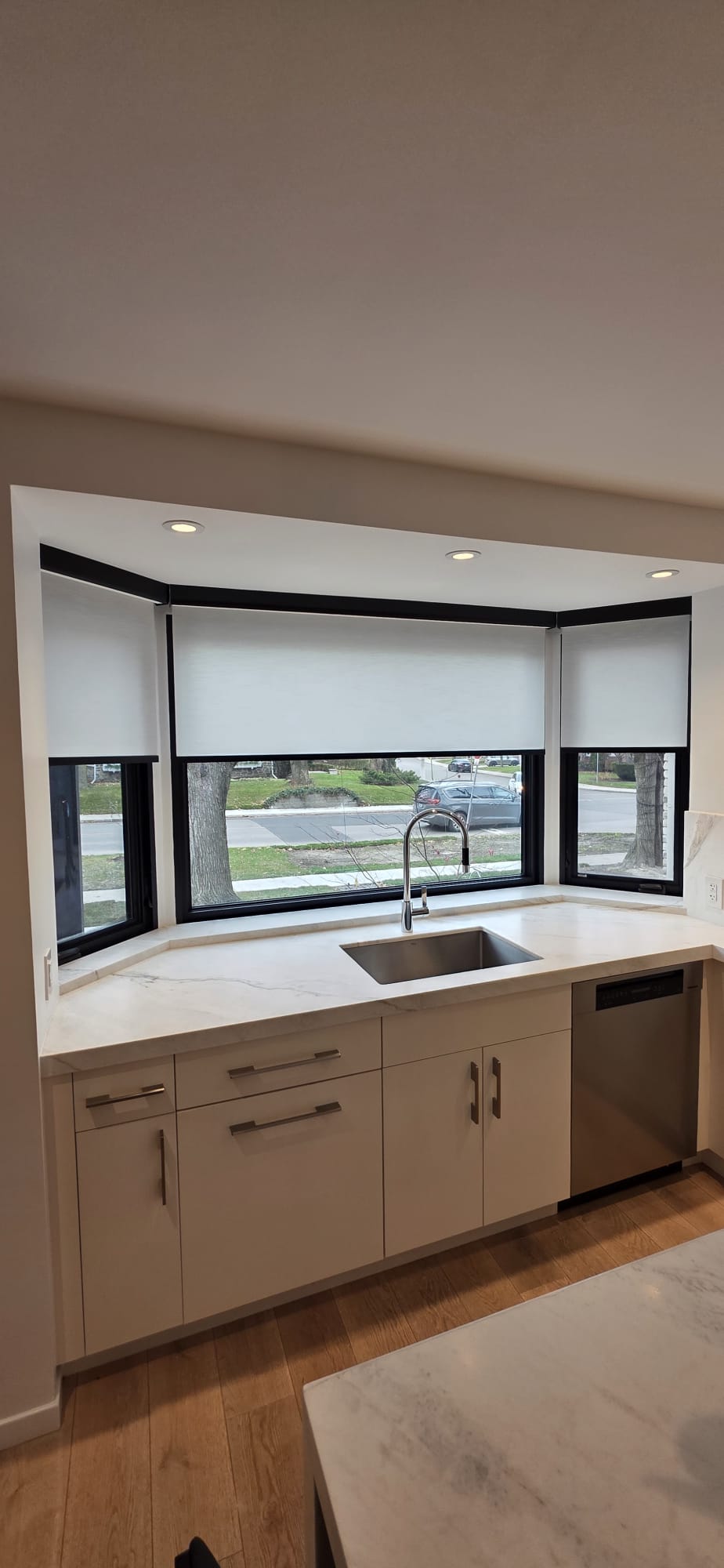
A roller shade is one continuous layer of fabric. You choose the opacity when you order — sheer, light-filtering, solar screen or blackout — and that is how the shade behaves for its whole life. To let more light in, you raise it. To block more light, you lower it.
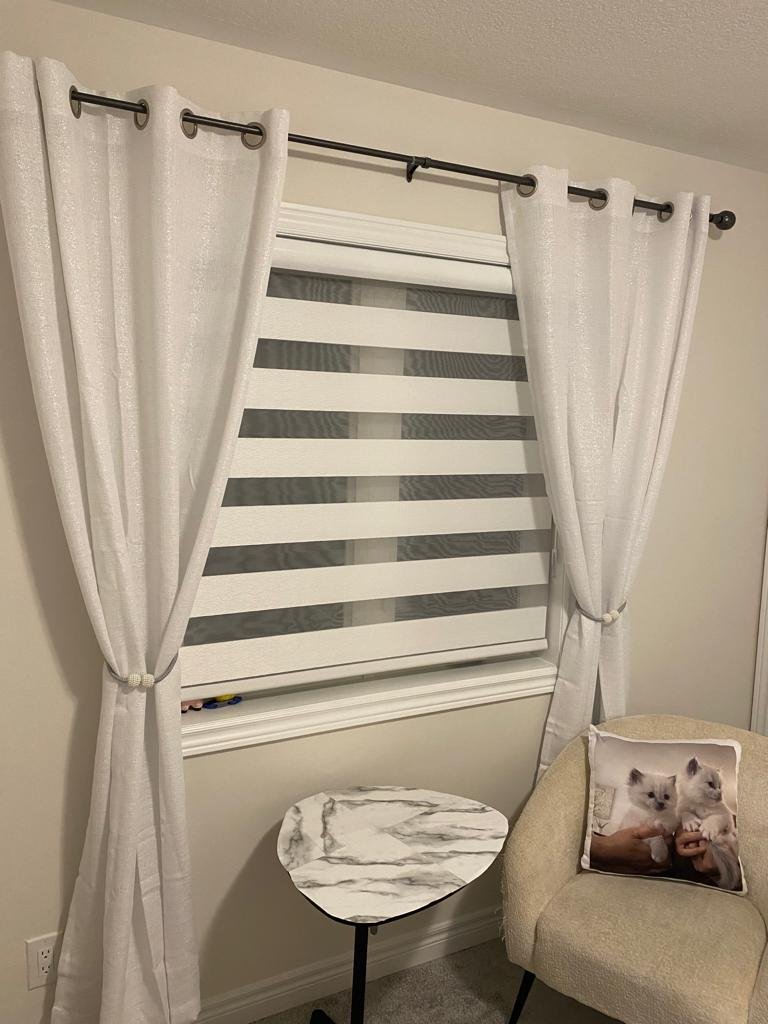
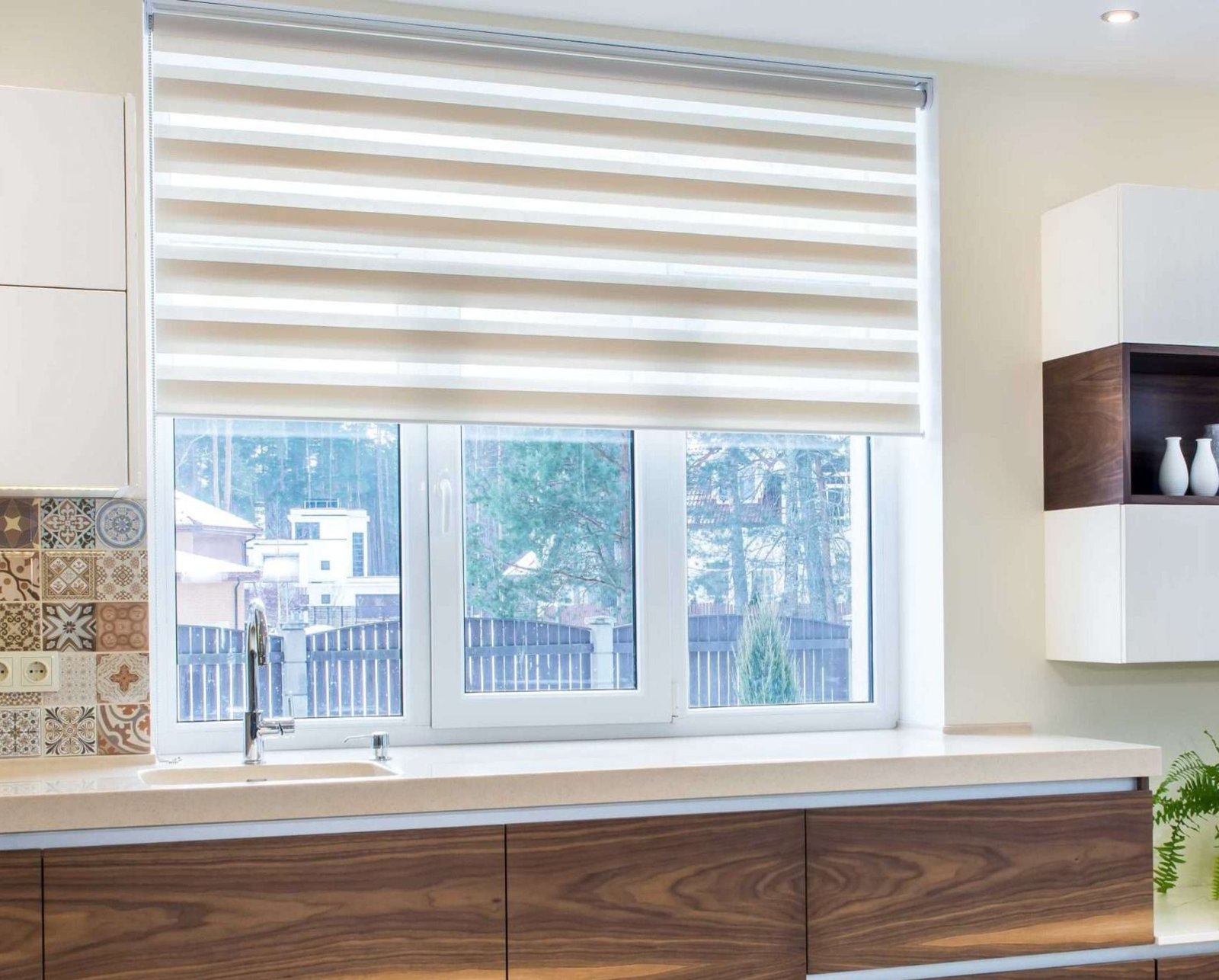
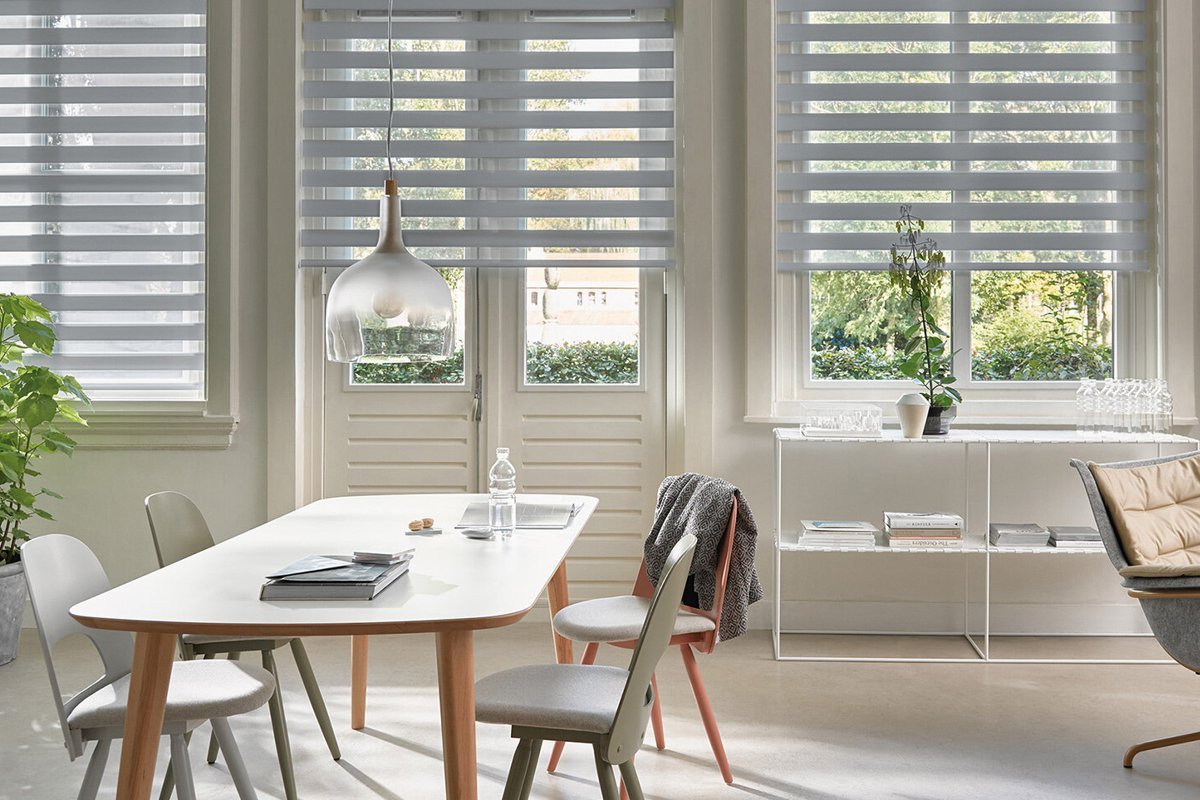
A zebra blind is two layers of fabric on one tube, each woven with alternating sheer and solid horizontal bands. Rolling the shade slightly slides the bands past each other. Line up the sheer bands and you get filtered daylight and a soft view out. Offset them so the solid bands cover the sheers and the window closes for privacy. You change the light without raising the shade at all.
That single mechanical difference explains almost everything else in this comparison: zebra blinds give you more control from one product, while roller shades give you a cleaner look and a wider choice of specialist fabrics.
Side-by-side comparison
The table below uses the same installed price ranges we quote across the GTA. Prices include custom manufacture, hardware and professional installation for a standard window up to about 48 inches wide.
| Zebra blinds | Roller shades | |
|---|---|---|
| Installed price (standard window) | $180–$320 | From $170, typically $170–$300 |
| Light control | Adjustable: filtered light or privacy without raising | Fixed by fabric choice; raise or lower to adjust |
| Blackout option | Blackout zebra (near-dark, small light gaps at bands) | True blackout fabric, side channels available |
| Look | Textured, horizontal banding | Flat, minimal, almost disappears when raised |
| Cleaning | Vacuum with brush; sheer bands need gentler care | Wipeable vinyl-backed and solar fabrics; easiest to clean |
| Motorization | Adds roughly $180–$280 per window | Adds roughly $180–$280 per window |
| Best rooms | Living rooms, street-facing rooms, kitchens | Bedrooms, nurseries, media rooms, wide glass |
Light control: the real deciding factor
If a room faces the street, zebra blinds usually win. In daytime you can keep the sheer bands aligned, enjoy the light and still have some privacy from the sidewalk, then close the bands in the evening when the lights are on inside. A roller shade in the same room forces a choice: light-filtering fabric that people can see shapes through at night, or a heavier fabric that makes the room dim in the daytime.
If a room needs to be dark, roller shades win. A blackout roller with a tight inside mount, or with side channels, gets a bedroom as dark as any window covering can. A blackout zebra blind is very good, but the way the two layers meet always lets a little light through at the bands. For shift workers, babies and home theatres, we recommend the roller.
If the problem is glare rather than privacy — a west-facing living room at 5 pm, or a lake view in Oakville or Pickering — a solar-screen roller in 3% or 5% openness keeps the view and cuts the glare in a way neither a standard roller nor a zebra blind can.
Price: closer than you might think
On a standard window, the two sit within about $10 to $20 of each other at the bottom of the range. Zebra fabric costs slightly more to make because there are two layers, so a zebra blind starts around $180 installed and a roller shade from about $170. Blackout zebra and wide windows sit higher, roughly $320–$500.
Where prices diverge is on specialist fabrics. Designer textured rollers and premium solar screens can match or exceed a zebra blind. Motorization costs the same on either product. Our full room-by-room ranges are in the installed pricing guide, and the price range form further down this page gives you a ballpark for your own windows in a couple of minutes.
Cleaning and lifespan
Roller shades are the easiest window covering to keep clean. Most solar and vinyl-backed fabrics wipe down with a damp cloth and a drop of mild soap, which is why we suggest them for kitchens, bathrooms and homes with allergies or pets.
Zebra blinds are not difficult, but they need a little more care. A soft brush attachment on the vacuum every few weeks keeps dust out of the sheer bands, and spot cleaning should be gentle so the weave is not stretched. Do not soak or scrub the sheer bands.
Both last 10 to 15 years with normal use when they are professionally installed. Every job we do carries our five-year workmanship warranty on top of the manufacturer's warranty on the fabric and mechanism.
Our room-by-room recommendation
Living room and family room: zebra blinds, or a solar-screen roller if glare is the main problem.
Kitchen: roller shade in a wipeable fabric, or zebra if the kitchen faces neighbours.
Bedrooms and nursery: blackout roller shades. Pair with a sheer zebra in front if you want daytime privacy too.
Home office: zebra blinds, because screen glare shifts through the day and the bands let you adjust without losing all the light.
Patio doors and very wide glass: roller shades or vertical blinds, as a single wide zebra can be heavy to operate without a motor.
Most GTA homes we fit end up with zebra blinds on the main floor and blackout rollers upstairs. Matching the fabric colours across both keeps the house looking consistent from the street.
Book a free consultation
The easiest way to decide is to see both fabrics against your own window. We bring samples of each to your home at no charge, measure everything and give you one installed price per window. Or send a photo of the window on WhatsApp and get a ballpark price back within an hour.
Get my price range
Three fields, instant installed price range from our published pricing — then send it straight to Hayati on WhatsApp. Typical reply time: under 1 hour.
Related products
Keep reading
Frequently asked questions
- Are zebra blinds more expensive than roller shades?
- Slightly. Installed zebra blinds start around $180 per standard window and roller shades from about $170. Specialist roller fabrics can cost the same or more.
- Which is better for bedrooms, zebra or roller?
- A blackout roller shade. Blackout zebra blinds are good but let small amounts of light through where the bands meet. For full darkness, choose a roller with a tight inside mount or side channels.
- Do zebra blinds give privacy at night?
- Yes, when the solid bands are closed. With the sheer bands aligned and the lights on inside, people outside can see shapes, so close them in the evening.
- Which is easier to clean?
- Roller shades. Most solar and vinyl-backed fabrics wipe clean. Zebra blinds should be vacuumed with a soft brush and spot cleaned gently.
- Can I mix zebra and roller shades in one house?
- Yes, and most homes do. We match colours across both so the windows look consistent from outside.
Get a Free Quote on WhatsApp
Send a photo of your window and get an estimate within 1 hour.