Updated July 2026
Room-Darkening Blinds Guide: Blackout Zebra vs Roller
Why 'blackout' rarely means pitch black, how blackout zebra and blackout roller shades compare, and the mounting details that decide how dark a room really gets.
By Hayati, owner-operator · Published
Get a Free Quote on WhatsApp
Send a photo of your window and get an estimate within 1 hour.
Few window covering terms are used as loosely as 'blackout'. A fabric can block 100 percent of the light that hits it and the room can still be bright at 6 am, because light comes in around the edges, not through the fabric. Getting a room genuinely dark depends as much on how the shade is mounted as on what it is made of.
This guide explains the difference between room-darkening and blackout, compares blackout zebra blinds with blackout roller shades, and walks through the details we check at every bedroom window across the Greater Toronto Area.
Room-darkening vs blackout
Room-darkening fabric blocks most light and leaves a room dim — fine for living rooms, guest rooms and anyone who just wants to take the edge off the morning. Blackout fabric has an opaque coating or backing that stops essentially all light passing through the material itself.
Neither term describes the light gaps. A blackout fabric with a gap of half an inch on each side will still put a bright line down both edges of the window. That is why the next sections matter more than the fabric label.
Blackout zebra vs blackout roller
A blackout roller shade is one solid layer of blackout fabric. Lowered fully, the only light that gets in is around the edges, which can be reduced with a tight inside mount or eliminated almost entirely with side channels.
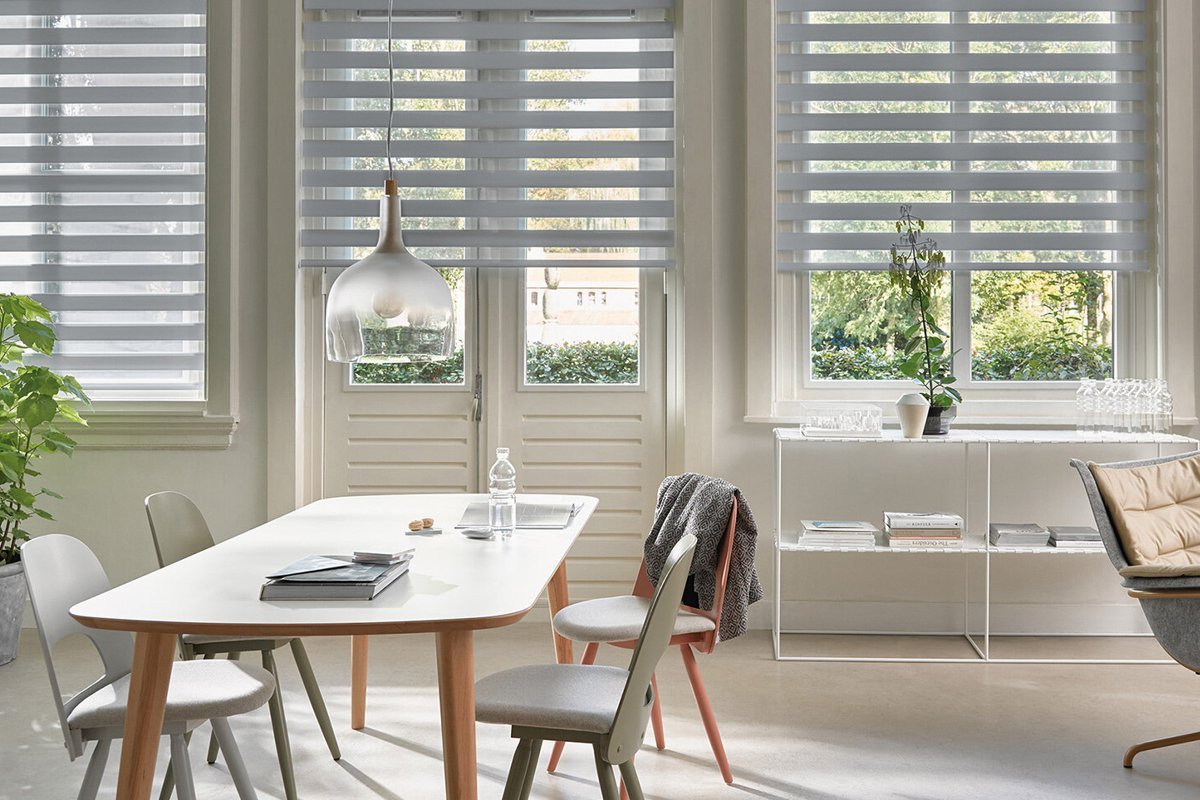
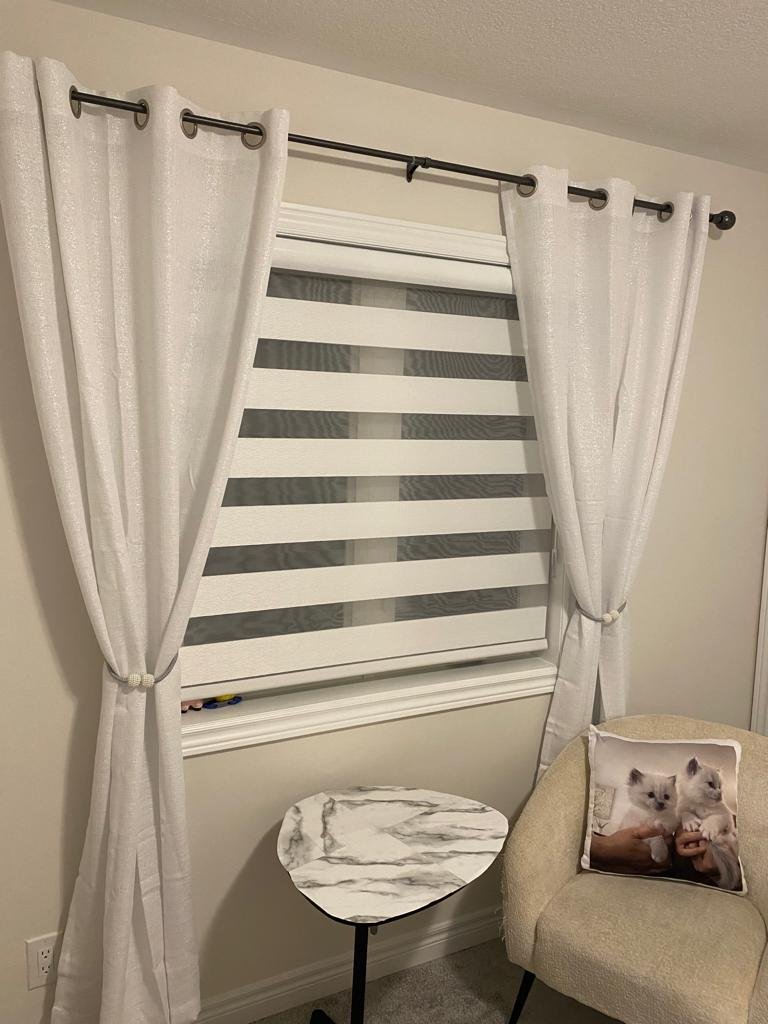
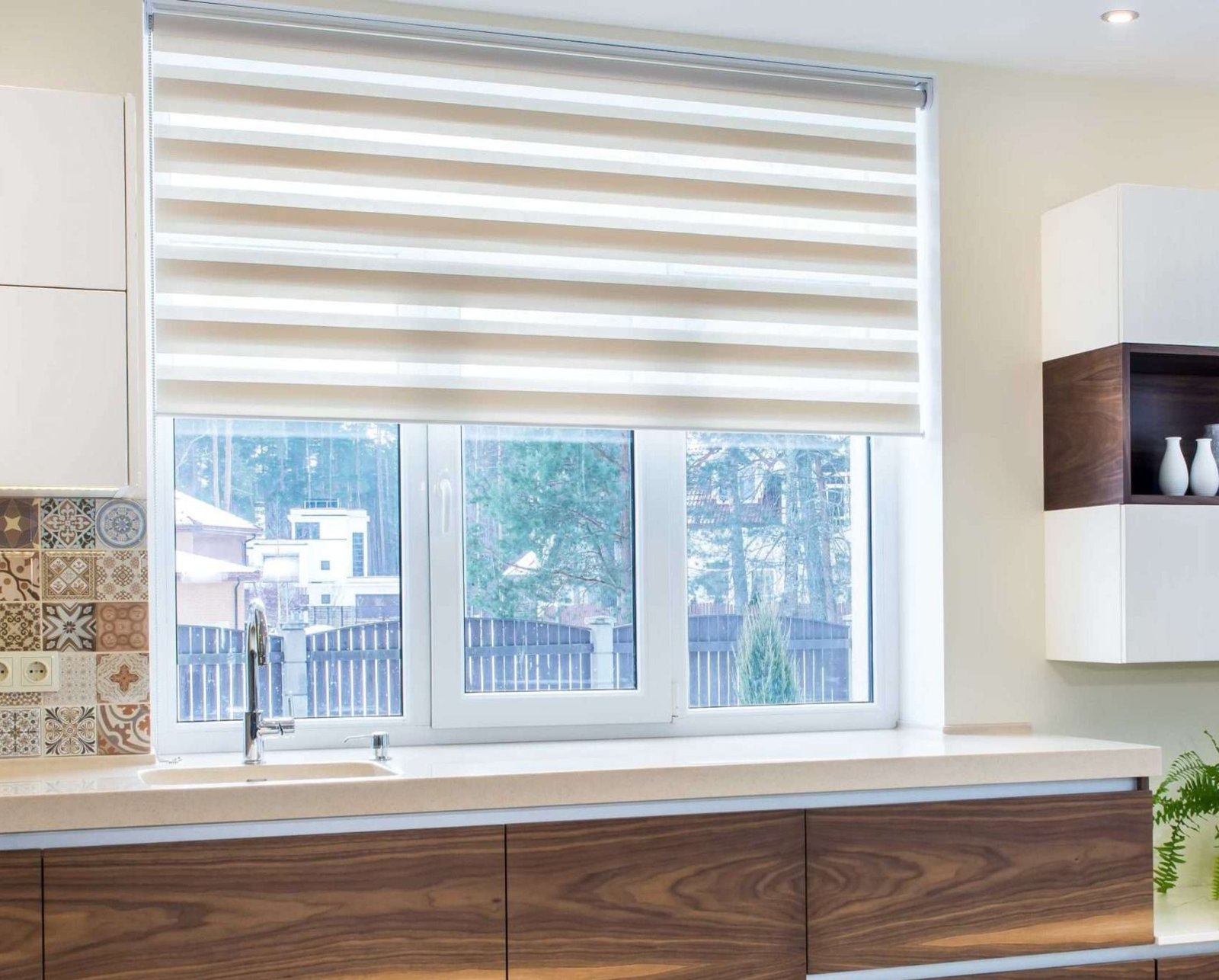
A blackout zebra blind uses blackout material in the solid bands. When closed it is very dark, but the two layers overlap rather than form one continuous sheet, so faint lines of light can show between the bands, especially on bright mornings. In return you get the zebra's daytime flexibility: open the bands for filtered light without raising the shade.
| Blackout roller | Blackout zebra | |
|---|---|---|
| Darkness when closed | Darkest option; near total with side channels | Very dark; faint light lines at bands |
| Daytime light | Raise the shade | Open the bands, shade stays down |
| Installed price (standard window) | From $170 | $320–$500 |
| Side channels available | Yes | Not typically |
| Best for | Babies, shift workers, home theatres | Guest rooms, teens, rooms used day and night |
Mounting decides how dark it gets
01 — Inside mount. The shade sits inside the window frame. It looks clean but leaves a small gap on each side for the fabric to roll freely. Best when the frame is deep and square.
02 — Outside mount. The shade mounts on the wall or trim above the window and overlaps the frame by two to three inches each side. It blocks more edge light and suits shallow frames.
03 — Side channels. U-shaped tracks on each side hold the fabric edge. Combined with a blackout roller, this is as close to a completely dark room as window coverings get.
04 — Cassette or valance. A cover across the top hides the roll and blocks light leaking over the tube.
05 — Bottom seal. Make sure the bottom bar sits on the sill or overlaps the frame, so light does not come in underneath.
Which bedroom gets which
Nursery and young children: a blackout roller with an outside mount or side channels. Babies nap in the day, and summer sunrise in the GTA is before 6 am.
Shift workers: the same — blackout roller with side channels, plus a cassette across the top. Daytime sleep needs the darkest setup possible.
Main bedroom: either works. Many people choose a blackout roller behind a light-filtering zebra, so the zebra handles daytime privacy and the roller drops at night.
Teen and guest rooms: a blackout zebra is usually enough, and the flexibility during the day is worth the faint light at the bands.
Home theatre or media room: blackout roller with side channels, ideally motorized so the whole room closes with one button.
Heat and energy
Blackout fabrics with a light-coloured backing reflect a meaningful amount of summer sun on south- and west-facing windows, keeping bedrooms cooler. In winter, a closed blackout shade adds a modest layer between the room and cold glass. We avoid giving specific savings figures because they depend heavily on the window, orientation and house, but most customers notice the difference in upstairs rooms.
Cleaning and care
Most blackout roller fabrics have a vinyl or acrylic backing that wipes clean with a damp cloth. Blackout zebra blinds should be vacuumed with a soft brush and spot cleaned gently. Avoid folding or creasing blackout fabric, as the coating can crack along a hard fold. More care questions are answered on our FAQ page.
Get the darkest room for your windows
At the free consultation we check frame depth, window squareness and the space above each window, then recommend the mount and fabric that will actually get the room dark. Send a photo of the bedroom window on WhatsApp for a ballpark, or book the visit and we will bring blackout samples to hold up to the glass.
Get my price range
Three fields, instant installed price range from our published pricing — then send it straight to Hayati on WhatsApp. Typical reply time: under 1 hour.
Related products
Keep reading
Frequently asked questions
- Do blackout blinds make a room completely dark?
- The fabric blocks light, but light still comes in around the edges. A blackout roller with an outside mount or side channels gets a room as dark as window coverings can.
- Is blackout zebra or blackout roller better for bedrooms?
- For maximum darkness, a blackout roller. Blackout zebra blinds are very dark but show faint light lines between the bands. They suit rooms used both day and night.
- What are side channels?
- Tracks on each side of the window that hold the shade's edge, closing the light gap. They're available on blackout roller shades.
- How much do blackout blinds cost?
- Blackout roller shades start from about $170 per standard window installed. Blackout zebra blinds run about $320–$500. Side channels and cassettes add a little per window.
- Can blackout shades be motorized?
- Yes. Motorizing adds roughly $180–$280 per window and is popular for media rooms and hard-to-reach bedroom windows.
Get a Free Quote on WhatsApp
Send a photo of your window and get an estimate within 1 hour.