Updated July 2026
Blocking UV and Afternoon Glare: What Actually Works
Zebra, roller or solar fabric — how openness factor changes UV blocking, what actually protects furniture from fading, and how to plan by window orientation.
By Hayati, owner-operator · Published
Get a Free Quote on WhatsApp
Send a photo of your window and get an estimate within 1 hour.
Two different complaints get treated as one problem. Glare is what you feel at four in the afternoon when the sun is low and the television is unwatchable. UV is what you do not feel at all, and it is what fades the sofa arm and the hardwood in front of the patio door over a few summers.
The fabric choice that fixes one does not automatically fix the other. This guide explains how openness and opacity actually work, what to expect from fade protection, and how to plan room by room depending on which way the window faces. The examples are from homes in Pickering, Ajax, Whitby, Markham and Richmond Hill, but the physics is the same everywhere in the Greater Toronto Area.
Openness factor, in plain terms
Openness factor is the percentage of a fabric's surface that is literally open weave. A 3% fabric is 3% holes and 97% yarn. That single number drives glare control, daytime privacy, view retention and — indirectly — how much UV passes through.
Lower openness means more glare control and more privacy, at the cost of some outward view. Higher openness keeps the view crisp and the room bright, and lets more direct sun through. There is no universally correct number; there is a correct number for a given window's orientation and what the room is used for.
The common mistake is choosing openness from a sample held up indoors. A 10% fabric looks pleasantly airy on a kitchen table and does very little against a west-facing four o'clock sun. We bring samples to the window itself at the consultation for exactly this reason.
| Openness | Glare control | UV blocked (typical) | Best for |
|---|---|---|---|
| 1% | Very high | ~99% | West-facing living rooms, home offices with screens |
| 3% | High | ~97% | Most west and south windows — the common pick |
| 5% | Moderate | ~95% | General living areas, average exposure |
| 10% | Low | ~90% | North-facing rooms, or a view you want kept sharp |
| Blackout (0%) | Total | ~100% | Bedrooms, media rooms |
Solar fabric, zebra, or blackout roller
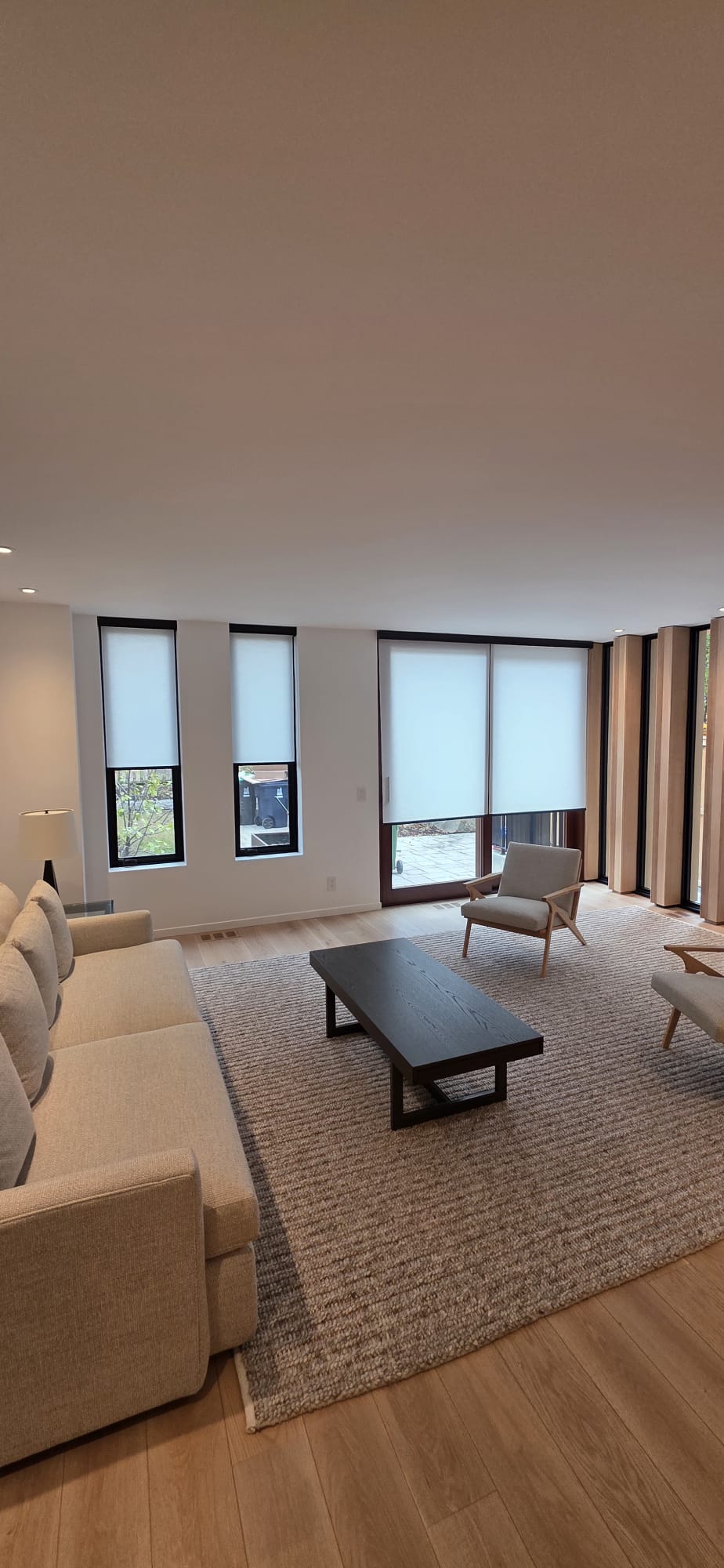
Solar screen fabric is the purpose-built answer to glare and heat. It is a tight open weave, usually 1% to 5%, that cuts the beam while keeping a usable daytime view out. On a west-facing living room or a south-facing patio door, this is the fabric we recommend most often, mounted as a plain roller shade.
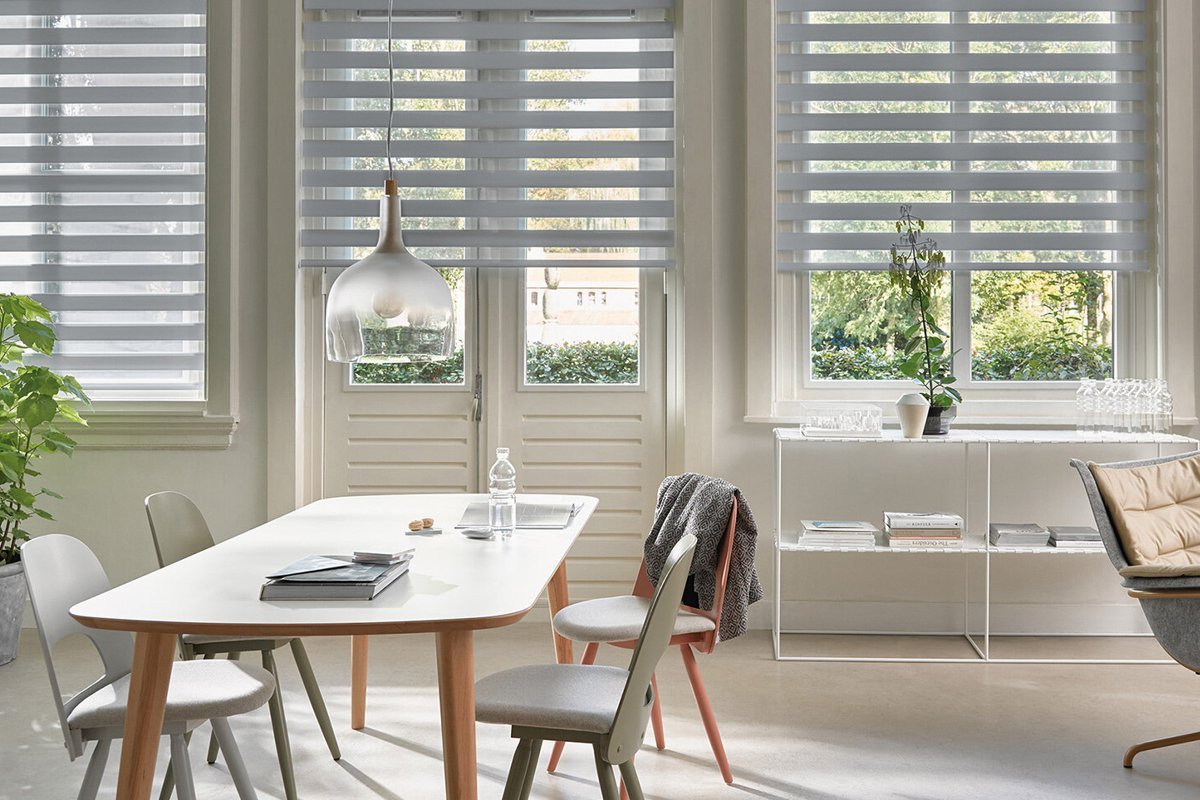
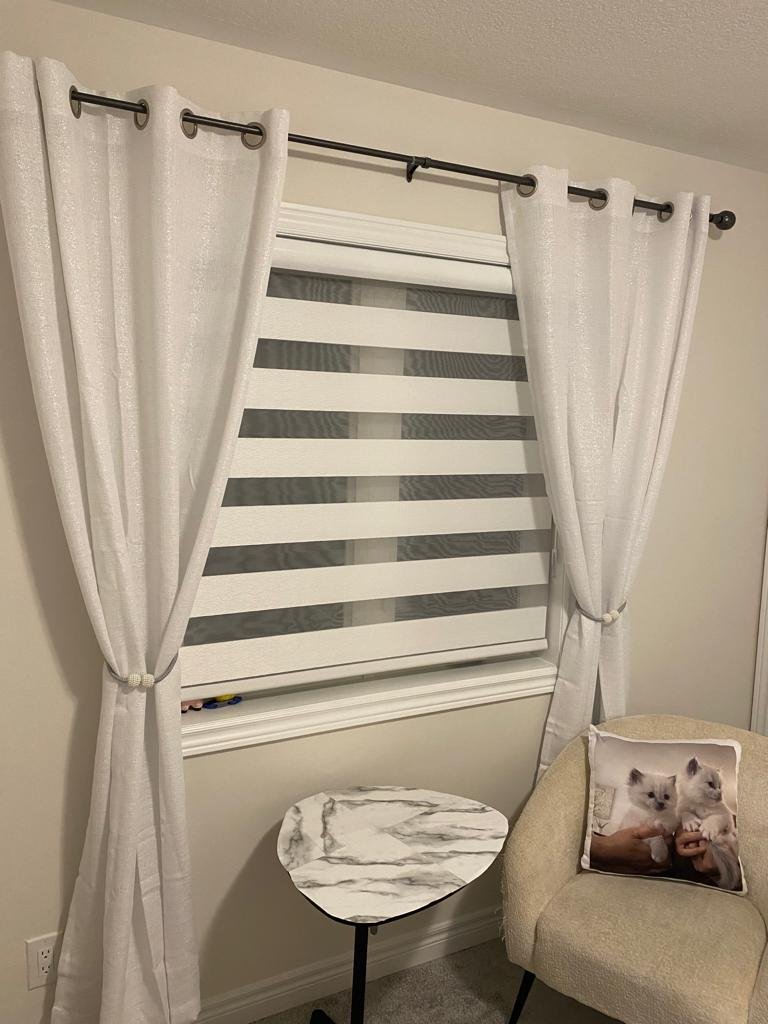
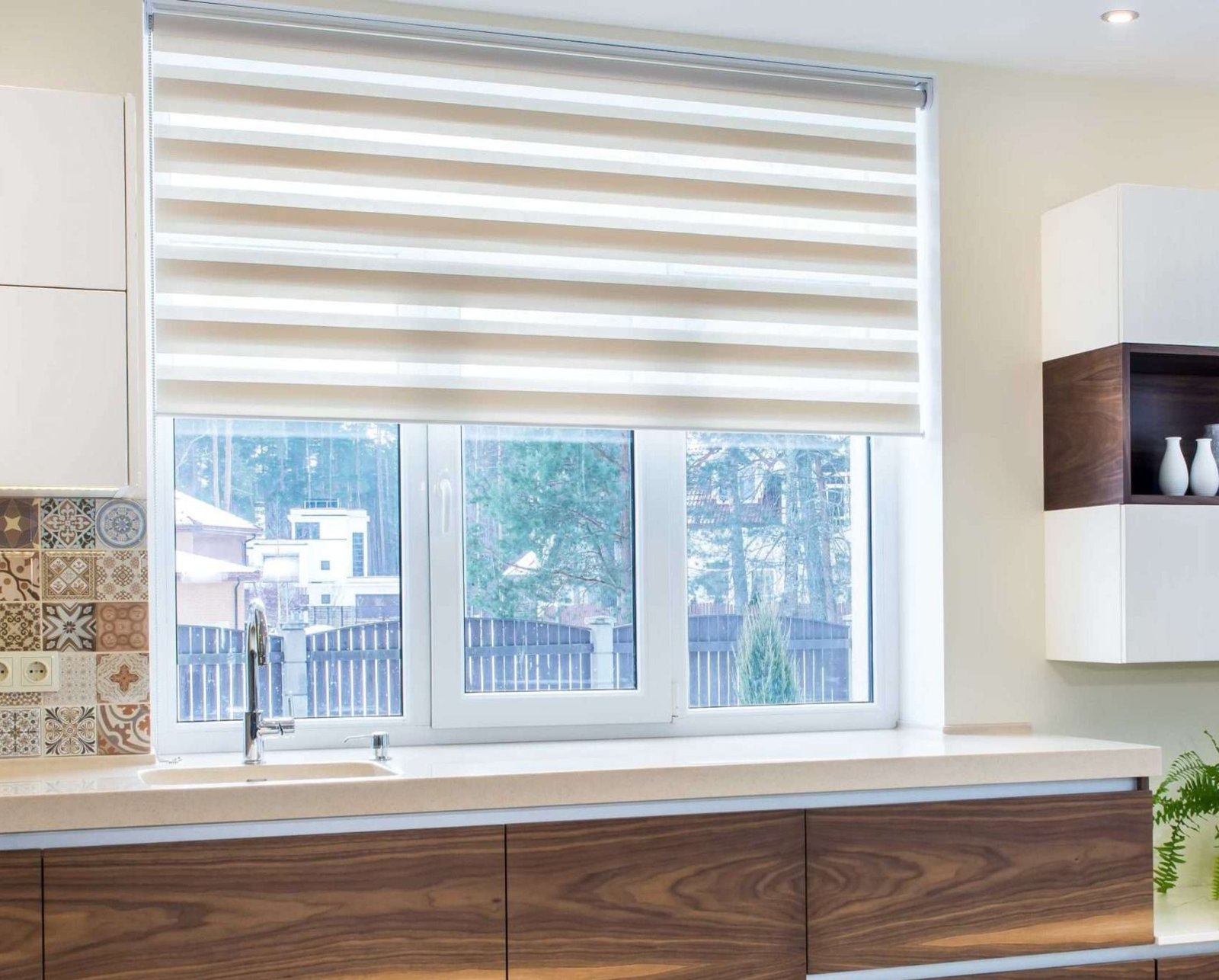
Zebra blinds handle a different situation: rooms where the sun matters for part of the day and privacy matters the rest of it. Line the bands up for near-solid coverage in the late afternoon, offset them the rest of the day. The trade-off is that when the bands are offset, the sheer sections pass real UV — a zebra is excellent at flexible light control and only average at all-day fade protection.
Blackout rollers block essentially everything and are the right answer in bedrooms and media rooms, and nowhere else. Fitting blackout in a room you actually live in during the day means using it half-open, which looks unfinished and defeats the point.
The layered approach is common in GTA great rooms: a solar roller for daytime glare with a blackout roller or drapery behind it for the evening. Two shades in one bracket costs more, but it is the honest solution when one fabric cannot do both jobs.
What UV blocking really does for your furniture
Fading is caused by ultraviolet light, visible light and heat together. UV is the largest single factor but not the only one, so no window covering stops fading entirely — anyone claiming otherwise is overselling. What a good solar fabric does is slow it down substantially, which over years of a west-facing exposure is the difference between a sofa that ages evenly and one with a bleached arm.
A 3% solar fabric blocks roughly 97% of UV while the shade is down. The catch is in that last clause: protection only counts when the shade is closed during the hours the sun is on the glass. This is the strongest practical argument for motorization on the windows most at risk — a schedule closes them at two in the afternoon whether anyone is home or not.
Low-E glass in newer builds across Markham, Richmond Hill and the Durham subdivisions already filters part of the UV. It helps, and it is not enough on its own for a room with hardwood and a leather sofa facing west.
If a specific piece matters — a piano, artwork, a rug — plan the shade around that piece's wall rather than around the window's appearance. We will point this out on site if we see it.
Planning by orientation, season by season
West-facing rooms are the difficult ones. Low afternoon sun comes in almost horizontally from spring through fall, and no overhang stops it. Living rooms and kitchens facing west across Pickering, Ajax and Whitby usually want a 1% or 3% solar roller, or a zebra with a low-openness sheer if daytime privacy also matters.
South-facing rooms get the longest exposure but at a higher angle, so glare is milder and heat gain is the bigger issue. A 3% or 5% fabric works well, and the difference between summer and winter is dramatic — a south window that is uncomfortable in July is the best room in the house in January.
East-facing rooms get flat, hard sun early. That is fine in a kitchen and a problem in a bedroom, which is why east bedrooms are where we fit blackout most often, in Markham and Richmond Hill new builds as much as anywhere else.
North-facing rooms get no direct beam at all. Choose 5% or 10% and keep the view — spending on a 1% fabric here buys nothing.
Winter is worth a mention because people forget it. The low December sun reaches far deeper into a room than the high summer sun does, so a south or west room can have worse glare in January than in July even though nobody thinks of it as a sunny month.
What it costs installed
Roller shades in solar screen fabric run roughly $170–$320 per window installed, and zebra blinds $180–$320, both including custom manufacturing and installation by the owner. Patio-door widths and great-room windows sit at the upper end or slightly above. Motorizing the windows that most need a schedule puts those at $450–$900 installed.
There is no measure fee, no travel charge anywhere in the GTA, and the price we write at the consultation is the price you pay. Message a photo of the window and its rough width on WhatsApp and you will normally have a ballpark back within the hour.
Get my price range
Three fields, instant installed price range from our published pricing — then send it straight to Hayati on WhatsApp. Typical reply time: under 1 hour.
Keep reading
Frequently asked questions
- Which blinds block the most UV?
- Blackout rollers block essentially all of it, but only work in rooms you keep dark. For a room you live in during the day, a 1% or 3% solar screen roller blocks roughly 97–99% of UV while keeping a usable outward view.
- Do zebra blinds block UV?
- With the bands lined up, yes — close to a solid shade. With the bands offset, the sheer sections pass real UV. Zebra blinds are best when you want flexible light control through the day rather than constant fade protection.
- Will blinds stop my furniture from fading?
- They slow it down significantly; nothing stops it completely. Fading comes from UV, visible light and heat together, so any product promising to eliminate it is overselling.
- What openness should I choose for a west-facing living room?
- 1% or 3% in most cases. Anything more open lets the low afternoon sun through and you end up keeping the shade fully down, which loses the view entirely.
- Do solar shades keep the room cooler?
- Yes, noticeably on south and west glass, because they cut solar heat gain before it enters the room. Lighter fabric colours reflect more heat; darker ones give a crisper view but absorb more.
- Can you help me choose the right fabric for each room?
- That is what the free in-home consultation is for. We hold samples against your actual glass at your actual exposure and recommend a different openness per room where it makes sense.
Get a Free Quote on WhatsApp
Send a photo of your window and get an estimate within 1 hour.