Updated July 2026
Allergy-Friendly Window Coverings: Materials That Actually Help
Which window coverings trap dust and which wipe clean in a minute, what low-VOC claims are worth, and a realistic cleaning routine — no marketing language.
By Hayati, owner-operator · Published
Get a Free Quote on WhatsApp
Send a photo of your window and get an estimate within 1 hour.
There is no such thing as a hypoallergenic blind, and we would rather say that at the start than dress it up. What exists is a real difference between a covering that collects dust in a hundred folds and one you wipe down in a minute — and over a year of a GTA pollen season, that difference is what people actually notice.
This guide covers which materials hold dust and which do not, what low-VOC and low-emission claims mean once you look past the packaging, and a maintenance routine that takes minutes rather than an afternoon. It applies to any home across the Greater Toronto Area, from Ajax and Durham Region through York Region and East Toronto.
Which coverings hold dust, and which do not
Surface area and texture decide almost everything. A flat vinyl or tightly woven roller shade is one smooth plane — dust lands on it and comes off with a damp cloth. A cellular shade is dozens of enclosed pockets that you cannot reach into. Heavy lined drapery is a large area of soft fibre that behaves like a vertical carpet between washes.
Horizontal blinds with slats are the classic problem: every slat has a top face that collects, and cleaning means doing each one. They are not disqualified, but if allergies are the driving reason for the purchase, they are rarely what we recommend.
Vertical blinds are better than most people assume. The vanes hang vertically, so far less settles on them than on a horizontal slat, and PVC vanes wipe clean individually in seconds. On a patio door — the largest single opening in most homes — that is a genuine advantage over drapery.
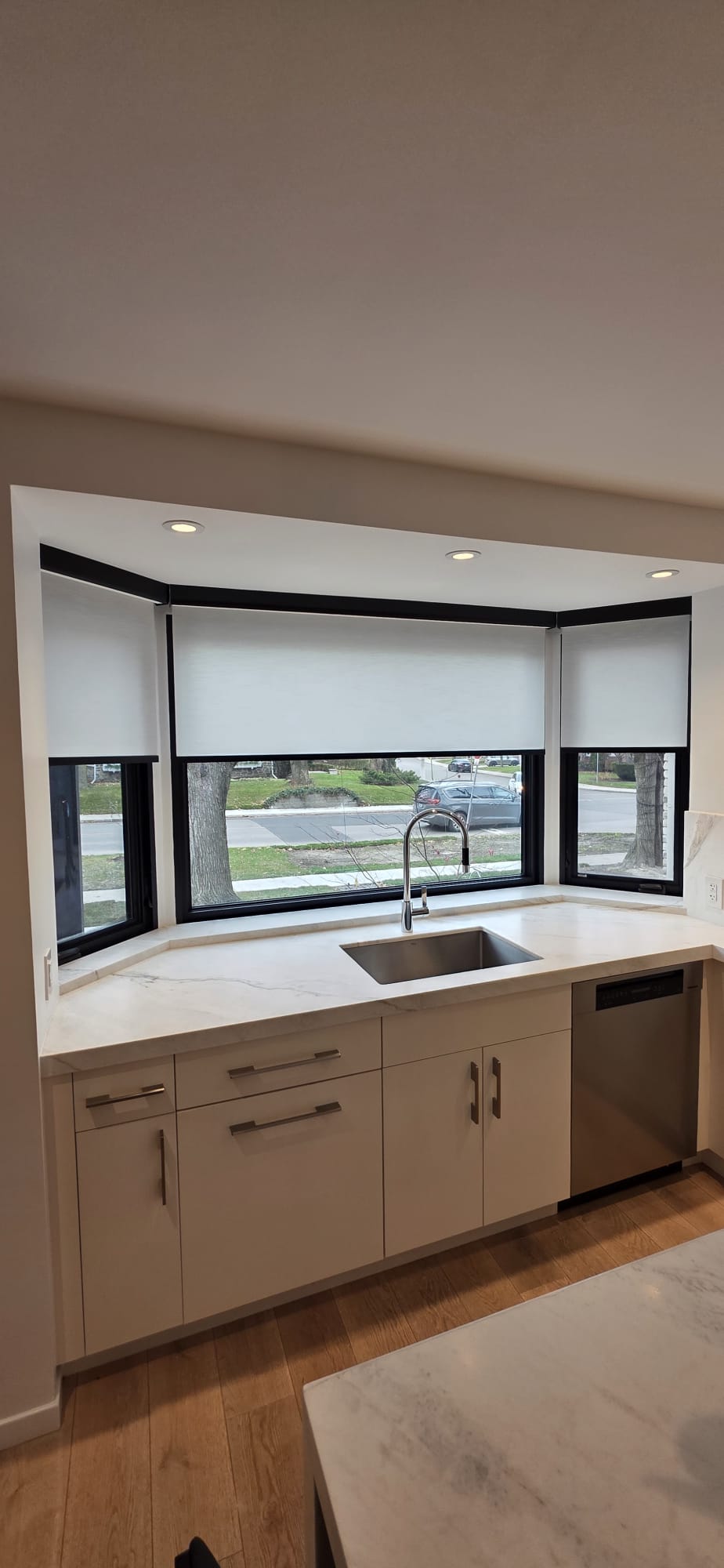
Roller shades in a smooth or vinyl-coated fabric are the easiest of all to keep clean, which is why they are the product we suggest most often for allergy-conscious households and for kitchens.
| Covering | Dust behaviour | Cleaning effort |
|---|---|---|
| Roller shade, smooth or vinyl fabric | Sits on one flat surface | Damp cloth, whole shade in a minute |
| Vertical blinds, PVC vanes | Little settles on a vertical face | Wipe vanes individually, quick |
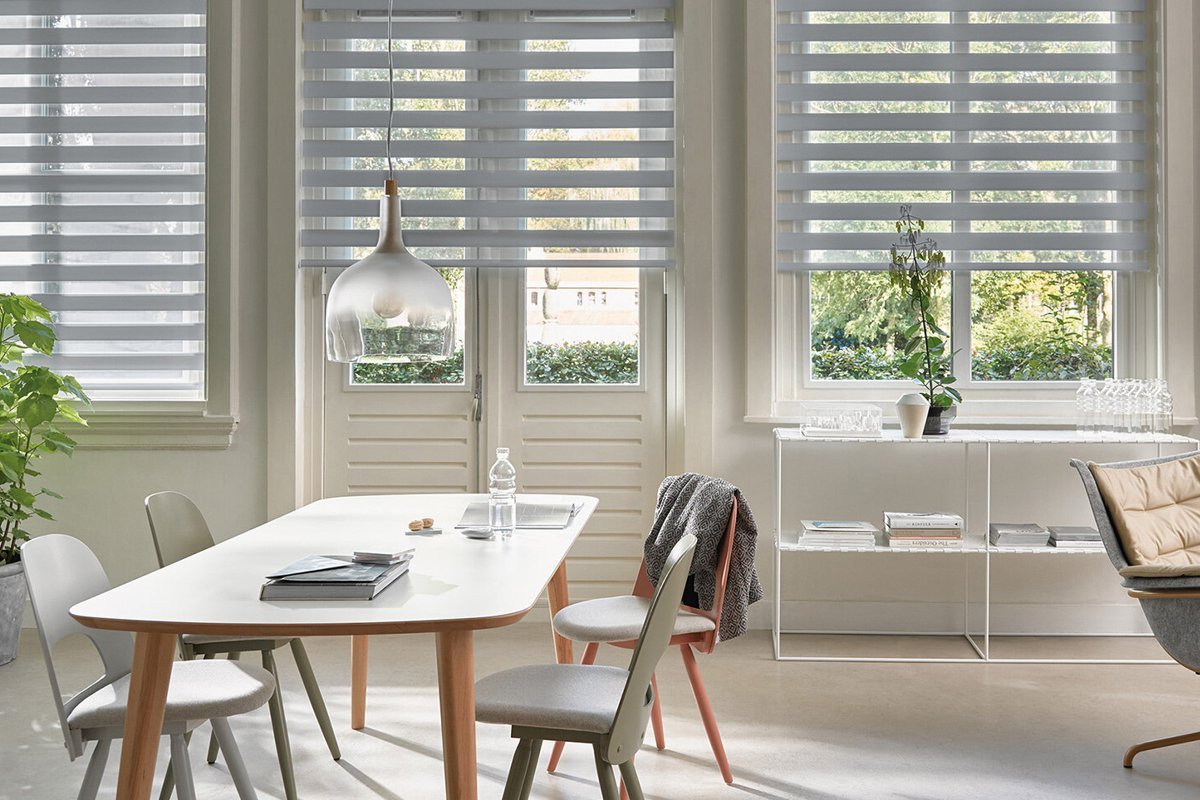
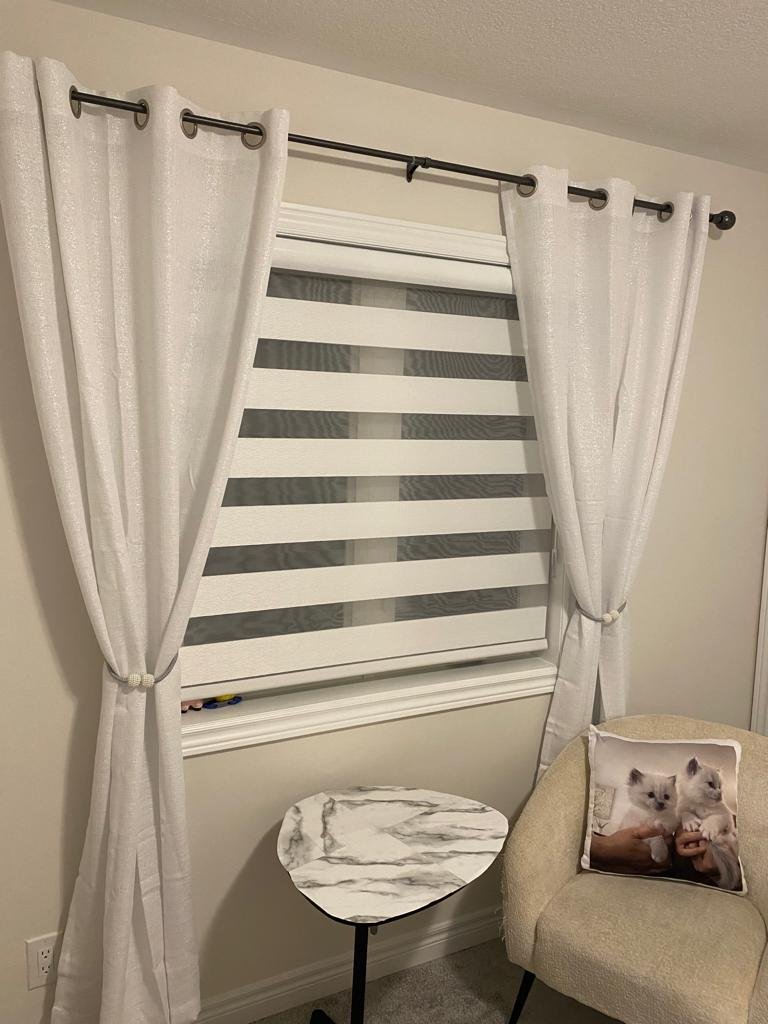
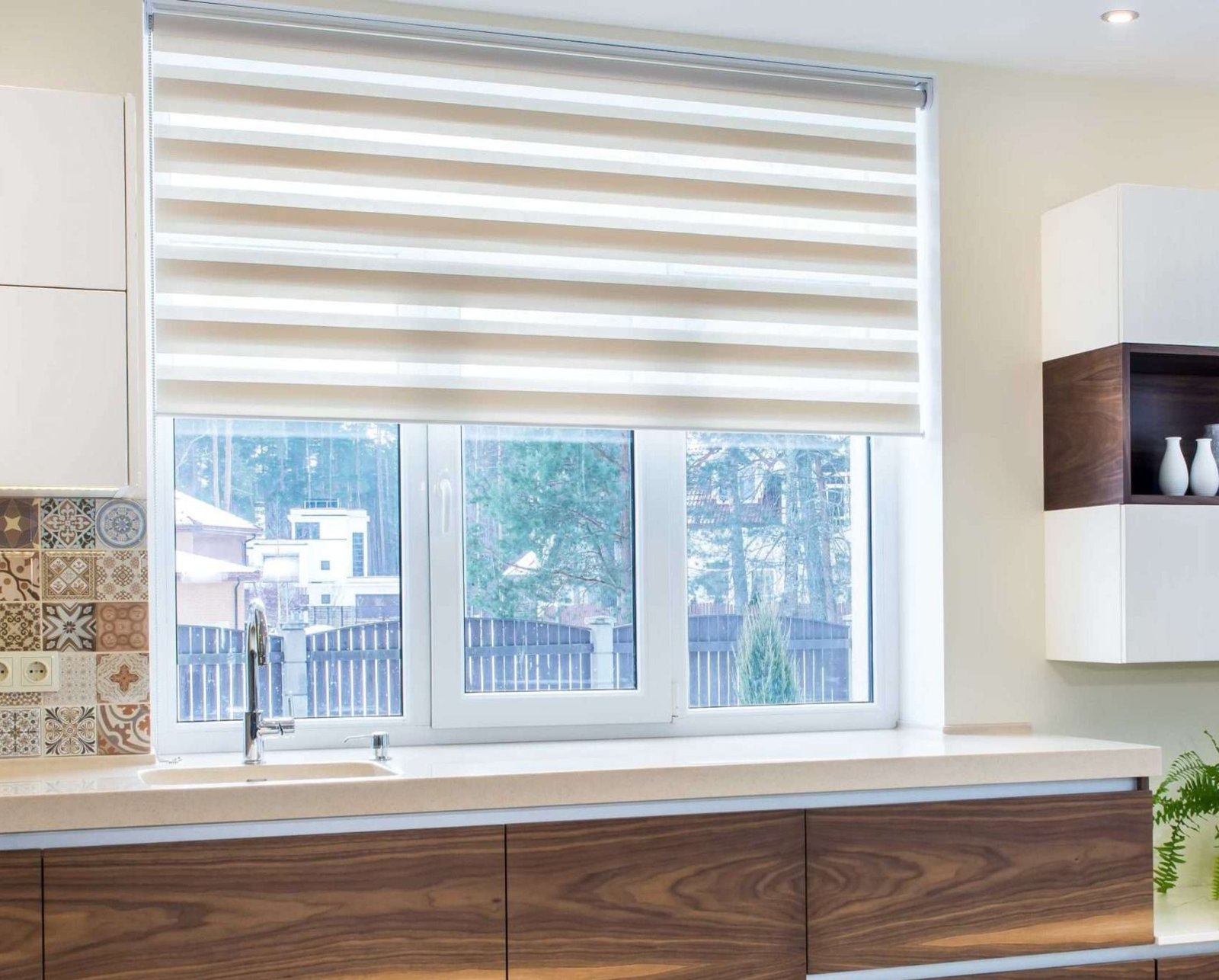
| Zebra blinds | Some dust in the band weave | Vacuum on low with a brush head |
| Cellular / honeycomb | Traps inside the cells | Hard to clean properly — avoid if allergies drive the choice |
| Horizontal slat blinds | Collects on every slat top | Slat by slat |
| Lined drapery | Large soft surface | Periodic professional cleaning |
Low-VOC claims: what is worth checking
VOCs are volatile organic compounds — the source of the smell from a new vinyl product in the first days after it is unwrapped. In window coverings they come mostly from PVC fabrics, coatings and adhesives, and the emission drops sharply within the first week or two.
Certifications worth asking about are GREENGUARD or GREENGUARD Gold, and OEKO-TEX Standard 100 on textiles. These are third-party tested against published limits, which is what separates them from a marketing phrase. "Eco-friendly", "green", "non-toxic" and "natural" on a product page mean nothing verifiable on their own.
Our honest read: for most households this is a minor factor next to how easy the shade is to clean. It matters more if someone in the home is chemically sensitive, if it is a nursery, or if the room is small with limited ventilation. In those cases, ask for a certified fabric and expect a modest price difference — some manufacturers charge for it and some do not.
One free thing that helps regardless: unwrap the blinds and air the room for a day or two after installation. We take all packaging away with us on install day, which is a small part of the same idea.
Practical material notes
Polyester and PVC-coated fabrics are the workhorses. They do not absorb moisture, they do not host mould in a humid bathroom, and they wipe clean. Their weakness is the initial off-gas, which is what a certified low-emission version addresses.
Natural woven woods and bamboo look excellent and are the opposite trade-off — an open, textured surface that holds dust and cannot be wiped. Beautiful in the right room, not the choice for a bedroom belonging to someone with dust allergies.
Fabric treatments deserve a sceptical eye. Antimicrobial and dust-repellent finishes are common in blind marketing, and the honest position is that independent evidence for a meaningful real-world benefit in a home is thin. We do not push them, and we do not price them into a quote unless you ask.
Cordless and motorized operation is a quiet win here. No cords means no dangling surface collecting dust, no cord cleats on the wall, and — the more important reason — no child or pet safety hazard.
A cleaning routine that takes minutes
01 — Monthly, all shades. Run a vacuum on low with the soft brush head from top to bottom while the shade is fully down.
02 — Seasonally, rollers and verticals. Wipe with a damp microfibre cloth and plain water. Mild dish soap for kitchen grease; no solvents, no bleach.
03 — Spot cleaning. Blot rather than scrub. Rubbing a coated fabric can lift the finish and leave a permanent shine mark.
04 — Never soak. Do not submerge a roller fabric or put vanes in a washing machine, whatever a video suggests — the fabric can shrink or the stiffener can warp.
05 — Zebra blinds. Vacuum only, in the closed position, and let the bands dry fully before rolling up if they have been dampened.
06 — Check the bottom rail. It collects more than the fabric does and is the fastest part to wipe.
What we recommend, and what it costs
For an allergy-conscious home the shortlist is short: smooth-fabric roller shades in living areas and bedrooms, PVC vertical blinds on patio doors, and cordless operation throughout. That combination is easy to clean, holds little dust, and is not expensive relative to the alternatives.
Roller shades run roughly $170–$320 per window installed and vertical blinds $220–$400, both including custom manufacturing and installation by the owner, with no measure fee and no travel charge across the GTA. If you want a certified low-emission fabric, say so at the consultation and we will price it against the standard option so you can see the actual difference rather than guess at it.
More general questions about materials, warranty and care are answered on our FAQ page, or send a photo of the room on WhatsApp and we will tell you plainly what we would fit there.
Get my price range
Three fields, instant installed price range from our published pricing — then send it straight to Hayati on WhatsApp. Typical reply time: under 1 hour.
Keep reading
Frequently asked questions
- Which blinds are best for allergies?
- Smooth-fabric or vinyl roller shades, and PVC vertical blinds on patio doors. Both present a flat surface that wipes clean, unlike cellular shades or slatted blinds that trap dust where you cannot reach.
- Are cellular or honeycomb shades bad for allergies?
- They are the hardest to clean properly, because dust settles inside the cells and cannot be wiped out. They insulate very well, so it is a trade-off — but if allergies are the reason you are buying, we would steer you elsewhere.
- What does low-VOC actually mean?
- That the product emits low levels of volatile organic compounds — the new-vinyl smell. Look for third-party certifications such as GREENGUARD Gold or OEKO-TEX Standard 100; unverified words like eco-friendly or non-toxic mean nothing on their own.
- Do new blinds off-gas?
- Vinyl and coated fabrics give off a mild smell for the first days after unwrapping, then it fades. Airing the room for a day or two after installation handles it. We remove all packaging on install day.
- How often should I clean my blinds?
- A monthly vacuum on low with a soft brush head, and a damp-cloth wipe of rollers and verticals a few times a year. That is enough for most homes.
- Are antimicrobial fabric treatments worth paying for?
- In our view, usually not. Independent evidence of a meaningful benefit in a normal home is thin, and we would rather you spend the money on a fabric that is genuinely easy to wipe clean.
Get a Free Quote on WhatsApp
Send a photo of your window and get an estimate within 1 hour.